
 07 / Lock repair
The lock may be telling you about the door.
Lock repairOakland, California.
You pull the handle a little harder, lift the door a touch, or jiggle the key in the familiar way. A small workaround can become a daily habit. For lock repair in Oakland, that history is useful information, not something you need to hide.
Describe what changes when the door closes.
A bolt that moves freely with the door open but catches when it's shut may point to an alignment problem. A key that won't turn in either position may suggest a different issue. Those observations help narrow the assessment; they aren't a remote diagnosis.
Don't use extra force to repeat the fault. If the key is bending or the fitting feels loose, stop and describe it. A broken key can add another problem to one that was already inconvenient.
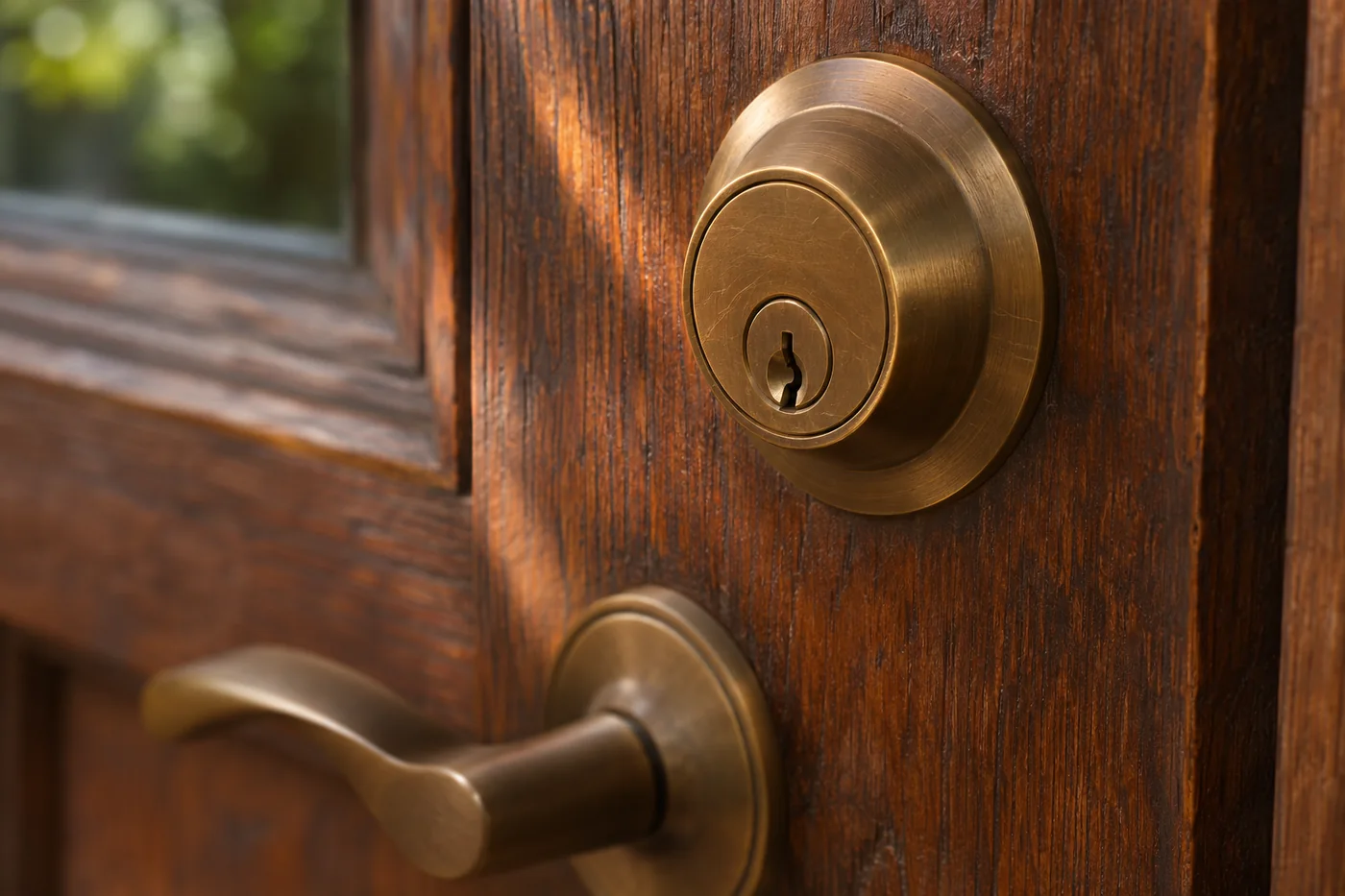
An older wood door, its hinges, frame, latch and cylinder work as a group. Swapping one part without checking the others may leave the original complaint untouched. The requested work should follow the actual finding.
A worn key is worth mentioning.
Do you have another key that behaves better? Does the problem happen from both sides? Did it start gradually or after something was changed? You don't need a technical explanation. A clear account of those differences can be enough to start.
A new copy made from a worn key isn't automatically the right repair. Equally, buying a new lock isn't the first answer to every stiff key. Ask what has been identified and which part the proposed work addresses.
If the lock works but you're worried about missing copies, that's a rekeying question. It can be discussed alongside a repair, but it serves a different purpose.
For a business, check closing as well as locking.
A glazed shop door that doesn't close consistently can create a security problem even when its cylinder is sound. The closer, latch and frame need to work together. Keep clear access and exit operation in view when hardware changes are proposed.
In a leased Oakland shop, work out whether the entrance belongs to the tenant or the building owner. Our commercial door guide explains why that distinction matters before parts are ordered.
After a repair, use the door the ordinary way. Open it, let it close as intended, latch it and try the key. If an adjustment changes the feel of the handle, have that explained while the work can still be checked together. Keep a record of the parts and work included.
A few useful answers.
Can you tell what is wrong from a photo?
A photo can help identify the fitting and visible damage. It doesn't establish every internal fault or show how the door behaves in use.
Should I replace a lock that keeps sticking?
The condition needs checking first. The key, cylinder, latch or door fit may be involved, so replacement alone may not solve it.