
 08 / Commercial locksmith
A business key needs a clear owner.
Commercial locksmithOakland, California.
One person opens, another closes, and a spare sits somewhere behind the counter. Then a key goes missing or a member of staff leaves. A commercial locksmith request in Oakland can begin with that small gap in the key list.
Separate the keys from the hardware.
A returned key doesn't tell you whether a copy exists. If the fittings work well and old key access is the concern, rekeying may be worth discussing. A loose handle, unreliable latch or reluctant closer needs attention of its own.
Walk through the doors staff actually use. The front shop entrance may be obvious, while a rear service door or shared corridor gets overlooked. Agree on which locks belong in the request instead of using a broad label such as the whole premises.
Our rekeying guide explains what can change while suitable hardware stays. Where doors need different access levels, discuss the desired key arrangement and whether the existing equipment can support it.
Your shop door may be part of someone else's building.
A business on Piedmont Avenue may occupy one unit within a larger property. The tenant's entrance, common lobby and shared access equipment can have different owners. Get the right authorization before changing a fitting that other occupants depend on.
Piedmont Avenue is an Oakland district; Piedmont is a separate city. Use the actual business address when arranging work. A familiar corridor name doesn't settle the city, building entrance or responsible party.
For a leased space, check the lease or speak with the manager about hardware approval and key requirements. That can prevent ordering a fitting that conflicts with the building's existing arrangements.
A working exit is part of a working entrance.
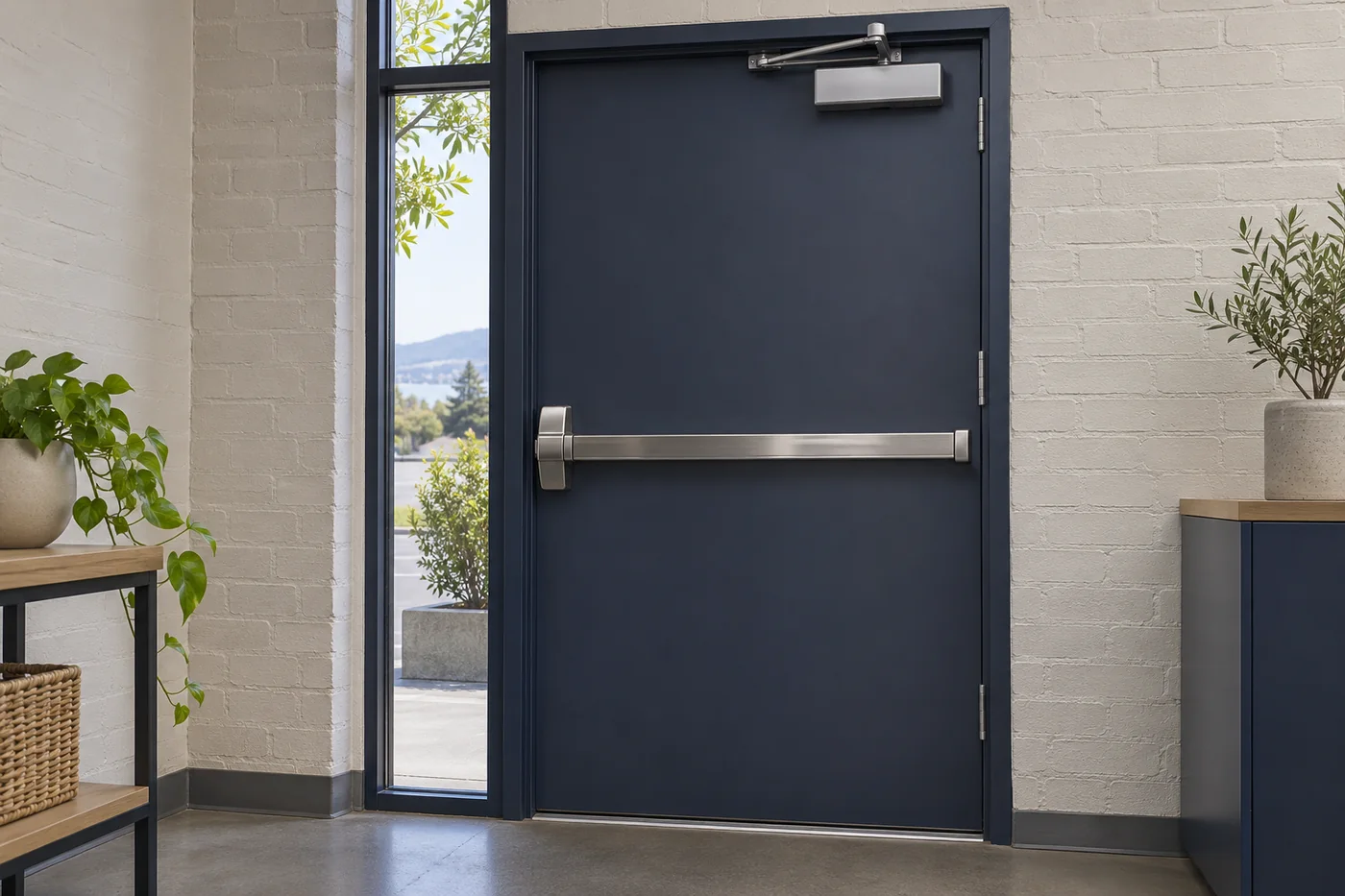
A commercial door should be considered as a complete opening. A strong cylinder doesn't help if the door fails to latch, and an alteration should not casually change the way people leave the space. Applicable requirements need checking for the actual door and use.
Describe any closer, exit device, keypad or other equipment already present. This page doesn't promise support for every electronic system or specialized fitting. Establish the supported work and parts before an appointment is based on them.
At the end, try the agreed doors and keys with the person responsible for opening and closing. Keep an itemized record, label the new copies and decide who holds them. A simple key list makes the next staff change easier to manage.
A few useful answers.
Can several business doors have different staff keys?
That may be possible with compatible hardware and an appropriate key plan. Define who needs each entrance before choosing the arrangement.
Can work be arranged outside opening hours?
Discuss the requested time and current availability. The site does not promise particular operating hours or out-of-hours access.